
Notetaking Strategies That Actually Work in College
Lectures move fast and no one checks your notes anymore. Here are the notetaking systems that help college students capture, organize, and actually remember what they learn.
By Sharon (Founder & Academic Director)
Why high school notetaking breaks down in college
In high school, teachers often write the important points on the board, repeat them, and tell students exactly what to study. College lectures do none of that. A professor may cover fifty slides in fifty minutes and expect students to decide, in real time, what matters. Students who try to transcribe everything end up with pages they never reread and no sense of what was actually important.
Good college notetaking is not about writing more. It is about capturing less, but capturing the right things, and organizing them so they are useful when the exam arrives weeks later.
One thing that works in your favor: most professors build their lectures from slideshows, and they usually post those slide decks to the course portal, whether that is Canvas, Blackboard, or another learning platform. Download them ahead of time and use them as your backbone. Because the slides already contain the structure and key terms, you can stop copying what is on the screen and instead spend class writing down the explanations, examples, and asides that never make it onto a slide.
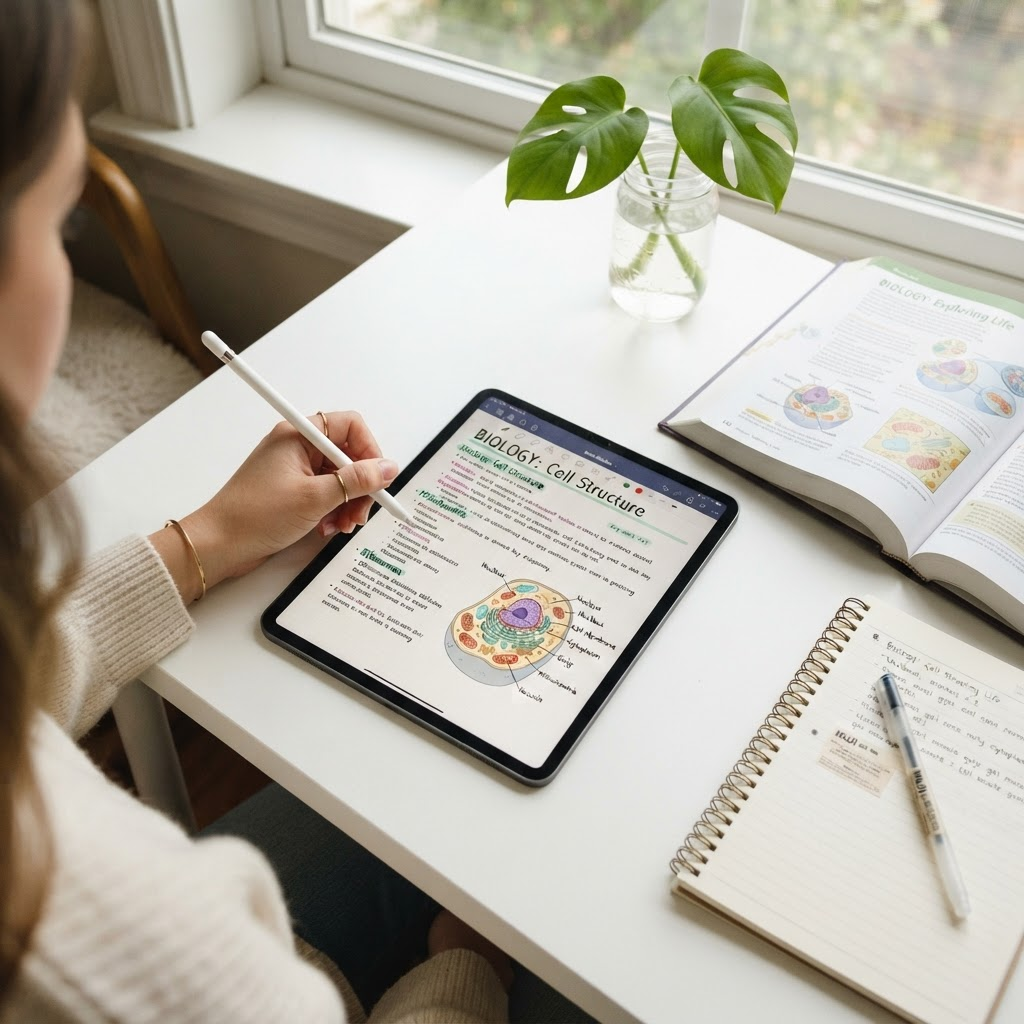
This is where taking notes on an iPad becomes incredibly effective. Apps like Notability and GoodNotes let you import those slide decks or lecture PDFs directly, then handwrite and annotate right on top of them with a stylus. You get the speed and focus of handwriting, but everything stays searchable, color-coded, and organized in one place, so you are never digging through loose papers before an exam.
Use the Cornell method to force organization
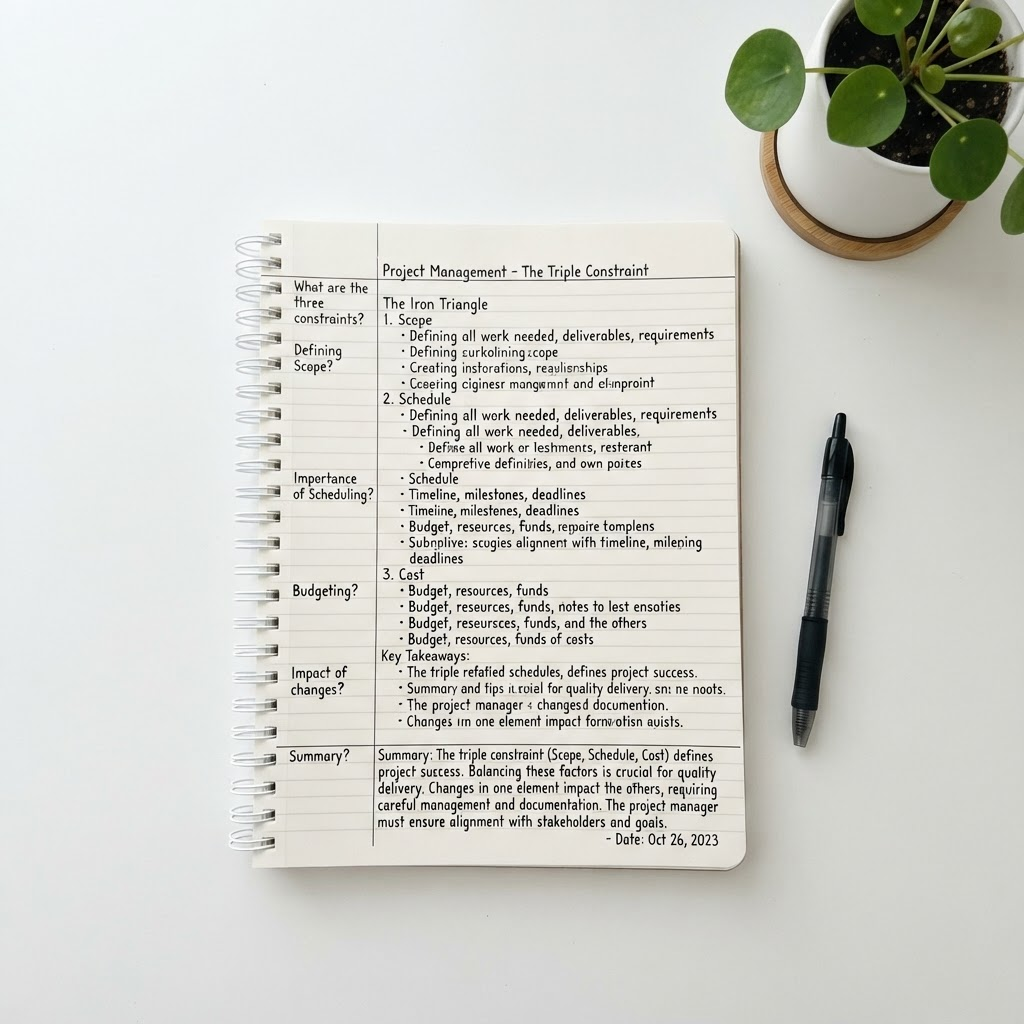
The Cornell system divides each page into three zones: a wide right column for notes during the lecture, a narrow left column for questions and cues added afterward, and a summary strip at the bottom. During class you only fill the right column. Within a day, you revisit the page, write questions in the left margin, and summarize the whole page in two sentences at the bottom.
That small act of review, done soon after the lecture, is where the learning actually happens. The left-column questions also turn every page into a ready-made self-quiz for exam week.
Review within 24 hours, then space it out
Notes you never revisit are close to worthless. Spend ten minutes within a day of each lecture cleaning up your notes, filling gaps, and adding cue questions. Then review them again at spaced intervals, a few days later, then a week, rather than cramming everything the night before the test.
Students who struggle to build these habits on their own benefit from working with a tutor who can model the process: sitting alongside them to turn a messy lecture into an organized, reviewable set of notes, and coaching the spaced-review routine until it becomes automatic.
Ready for one-on-one support?
Tell us about your student and we will match them with a tutor who fits their subject, personality, and schedule.
Request a Tutor